
Most full-time photographers earn between $40,000 and $99,000 a year, though earnings vary by niche, experience, and location.
Whether you’re photographing weddings, real estate, or wildlife, your income can look very different. So, is it possible to make a living doing what you love? Let’s find out.
How Much Photographers Make (& Where They Make the Most)
While the salary range for professional photographers is wide, they typically earn around $42,345 per year. Factors that affect your profits include niche, location, experience, and customer demand. For example, wedding photographers often make the most because of location and demand.
However, industries like photojournalism, commercial photography, and nature photography can open the door into more freelancing opportunities and career advancement. For instance, many photographers shift into careers as art or creative directors and photo editors..
If you’re just starting in your photography career and aren’t sure what gear you need, check out our recommended beginner photography equipment and get tips from real photographers!
How Much Photographers Make on Average
Data from sites like Indeed and ZipRecruiter show an average annual salary of $42,141 to $42,345 and an average hourly rate of $20.30.
But those numbers don’t tell the whole story — for one thing, all of these factors can impact your earning potential:
- Where you work
- The type of photography you do
- Your experience level
- Reputation
- Marketing
- Capacity
- Style
To get the full picture, take a peek at photographer salaries across industries. We rounded up the essential data surrounding photographers’ salaries below using trusted job market sites like ZipRecruiter and Indeed.
(Note: Salary estimates like these change periodically, but were accurate when this article was published.)
Wedding Photographers
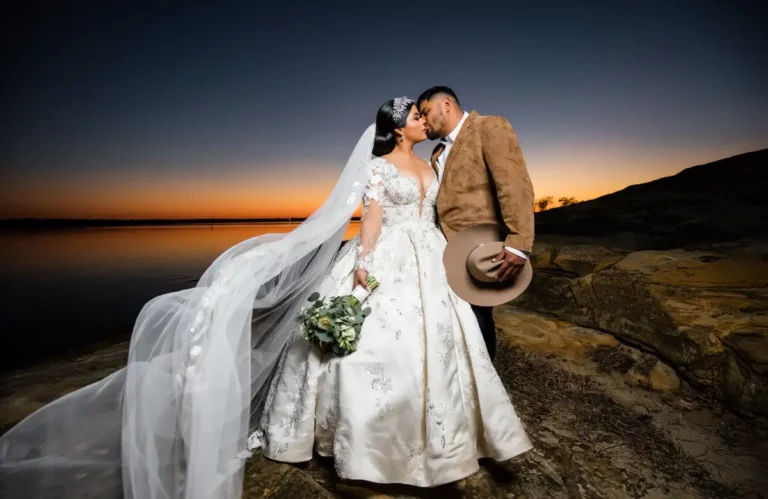
Wedding photographers capture a couple’s big day from start to finish, including candid moments, portraits, and key events like the ceremony and reception. The job requires technical skill, creativity, and the ability to work under pressure in a fast-moving environment.
Average Salary: $99,199
Average Per Hour: $48
Highest Paying States for Wedding Photographers
- Washington — $112,353
- New York — $108,528
- Massachusetts — $108,338
- Alaska — $106,832
The states where it’s less lucrative to specialize in wedding photography are Florida ($74,131), West Virginia ($76,797), and Arkansas ($81,028). While far lower than the top-paying states, remember that most have a lower cost of living as well, showing that across the U.S., wedding photography is a good gig.
Check out more wedding photography statistics and trends.
Studio Photographers
Studio photographers work in a controlled setting, directing subjects and helping them feel as comfortable as possible. They work with people, animals, fashion items, artwork, and products, specializing in headshots, portraits, advertisements, and more.
Average Salary: $56,888
Average Per Hour: $27
Highest Paying States for Studio Photographers
- Nome, AK $70,570
- Escondido, CA $70,463
- Berkeley, CA $69,656
If you work in a city with a higher cost of living, you can likely charge more for your services. Your take-home pay will depend a lot on where you live, what/who you photograph, and overhead, like how much you pay to rent your studio.
Photojournalists
Photojournalists capture candid shots of local, national, or international news stories or events. Photojournalism could be ideal if you have a knack for following the news, traveling, and meeting new people.
Average Salary: $44,670
Average Per Hour: $21
Highest Paying States for Photojournalists
- Nome, AK $55,412
- Berkeley, CA $54,695
- Sitka, AK $53,812
Photojournalism may not seem lucrative at first glance, but it varies by the publication — a small local newspaper will likely pay far less than a larger national magazine, for instance. You can also freelance, shooting stories for different online news sites and magazines and getting paid by the photo.
This experience also opens doors to photo editor or art director roles, with average salaries of $46,000 and $122,000, respectively.
Learn more about becoming a photojournalist.
Real Estate Photographers
Real estate photographers are responsible for capturing photos of properties that will appeal to prospective buyers and renters. In a role like this, your photos could appear on real estate websites and local publications.
Average Salary: $62,338
Average Per Hour: $31
Highest Paying States for Real Estate Photographers
- Vacaville, CA $78,763
- Nome, AK $77,330
- Cupertino, CA $76,909
Nature and Wildlife Photography
If you adore the great outdoors, nature and wildlife photography could be your calling. You’ll document animals, insects, plants, trees, and everything Mother Nature offers. You can also explore macro- and microphotography to capture views most people never get to see.
Average Salary: $42,345
Average Per Hour: $20
Highest Paying States for Nature and Wildlife Photographers
- Nome, AK $52,529
- Renton, WA $52,352
- Mercer Island, WA $51,861
Although the average wildlife photographer’s salary is low compared to other specialties, it depends on your location, customer demand, and who you’re taking photos for. Nature photographers can also earn additional income from retail products related to their work, like digital images, prints, and photobooks.
Most nature photography jobs are on a freelancing basis, which gives you the freedom to submit and sell your individual photos to magazines, websites, book publishers, and even educational publishing houses.
Commercial Photographers
Commercial photographers capture polished images of brands, services, and products for ads that appear on social media, websites, billboards, and in print.
Average Salary: $42,345
Average Per Hour: $20
Highest Paying States for Commercial Photographers
- New York $46,327
- Massachusetts $46,246
- Connecticut $40,282
Compared to other types of photographers, the average salary for commercial photographers is comparatively low, but remember that you can make more profits depending on your location, the clients you freelance for, your experience, and credentials.
Where Photographers Earn the Most (and Least) Overall
Photography industry wages vary by location due to factors like:
- Demand
- Population density
- Resources
- Cost of living
Keep these factors in mind as you review our data table below, which shows where photographers earn the most vs. states where average salaries are lowest:
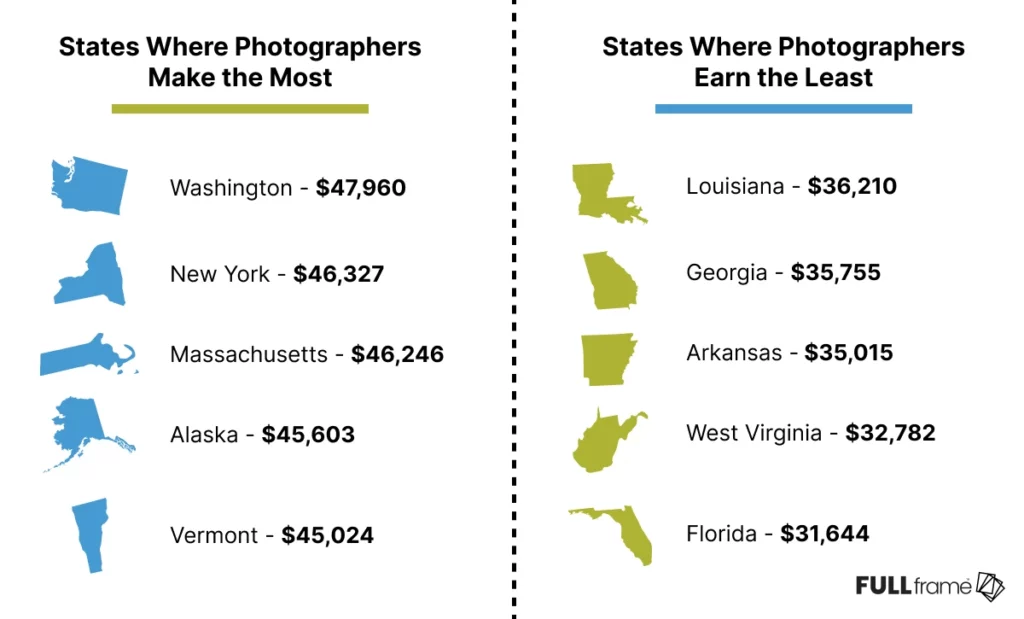
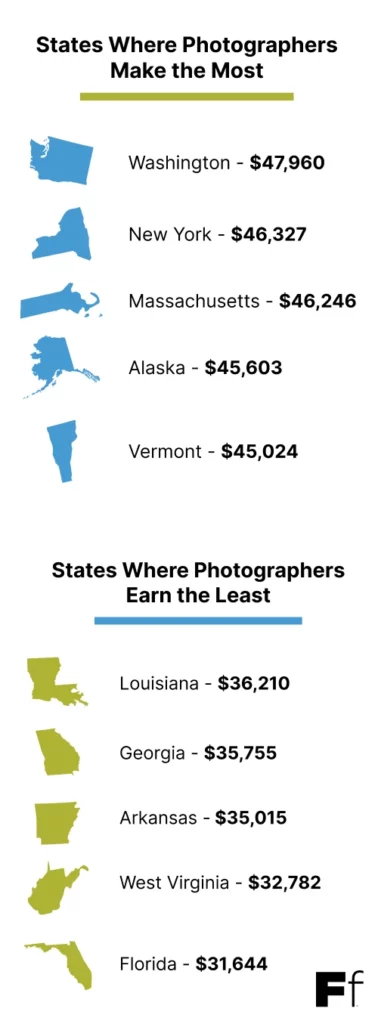
States where photographers earn the most:
- Washington — $47,960
- New York — $46,327
- Massachusetts — $46,246
- Alaska — $45,603
- Vermont — $45,024
States where photographers earn the least:
- Louisiana — $36,210
- Georgia — $35,755
- Arkansas — $35,015
- West Virginia — $32,782
- Florida — $31,644
While Washington has the highest salary of approximately $88,540, and Arkansas has the lowest salary of $36,690, these numbers don’t reflect your true business revenue. Strong marketing strategies, customer testimonials, discounts for first-time and returning clients, and add-on services can boost your income.
Factors That Impact Photographer Salaries / Business Earnings
Starting a photography business comes with its share of challenges, including how much to charge for your services to earn a living. Let’s zoom in on some of the factors that impact your overall income:
- Reputation: Experienced photographers charge $200-$500+ per hour, whereas beginners charge about $50-$100 per hour.
- Word of mouth: Great reviews on Google, Facebook, and Yelp can fill up your business book quickly, creating demand that allows you to charge more.
- Niche or specialty: Equipment, travel, second shooters, rush editing, permits, and other niche factors can affect how you price your services.
- Credentials: Photography insurance, education, and other credentials set you apart from non-credentialed photographers. You can even use your insurance to help promote your business!
- Add-on services and products: Prints, frames, rush-editing, wardrobe assistance, and other services and products help you outdo competitors and earn more revenue.
- Overhead and expenses: Pricing models, studio rentals, advertising, and other overhead costs all roll into how much you charge for your services.
Ready to get started? Take the first step and write your photography business plan.
Frequently Asked Questions About How Much Photographers Make
Do Photographers Make Good Money?
Yes, photographers can make good money, though it largely depends on your niche, experience, and location. Photographers who market themselves well and build a solid reputation have a much higher earning potential than those who don’t.
How Much Do Full-Time Photographers Make?
Full-time photographers earn an average annual salary of $46,303. However, salaries and hourly wages vary by state, city, demand, experience, credentials, and other factors.
How Much Do Wedding Photographers Make?
Wedding photographers make an average of $99,199 per year, depending on location and experience. They often earn more by offering add-ons such as engagement sessions, albums, a second shooter, or expedited photo delivery.